
Melissa Bourrai, BSc, MSc
Email: melissa.bourrai@gmri.org.nz
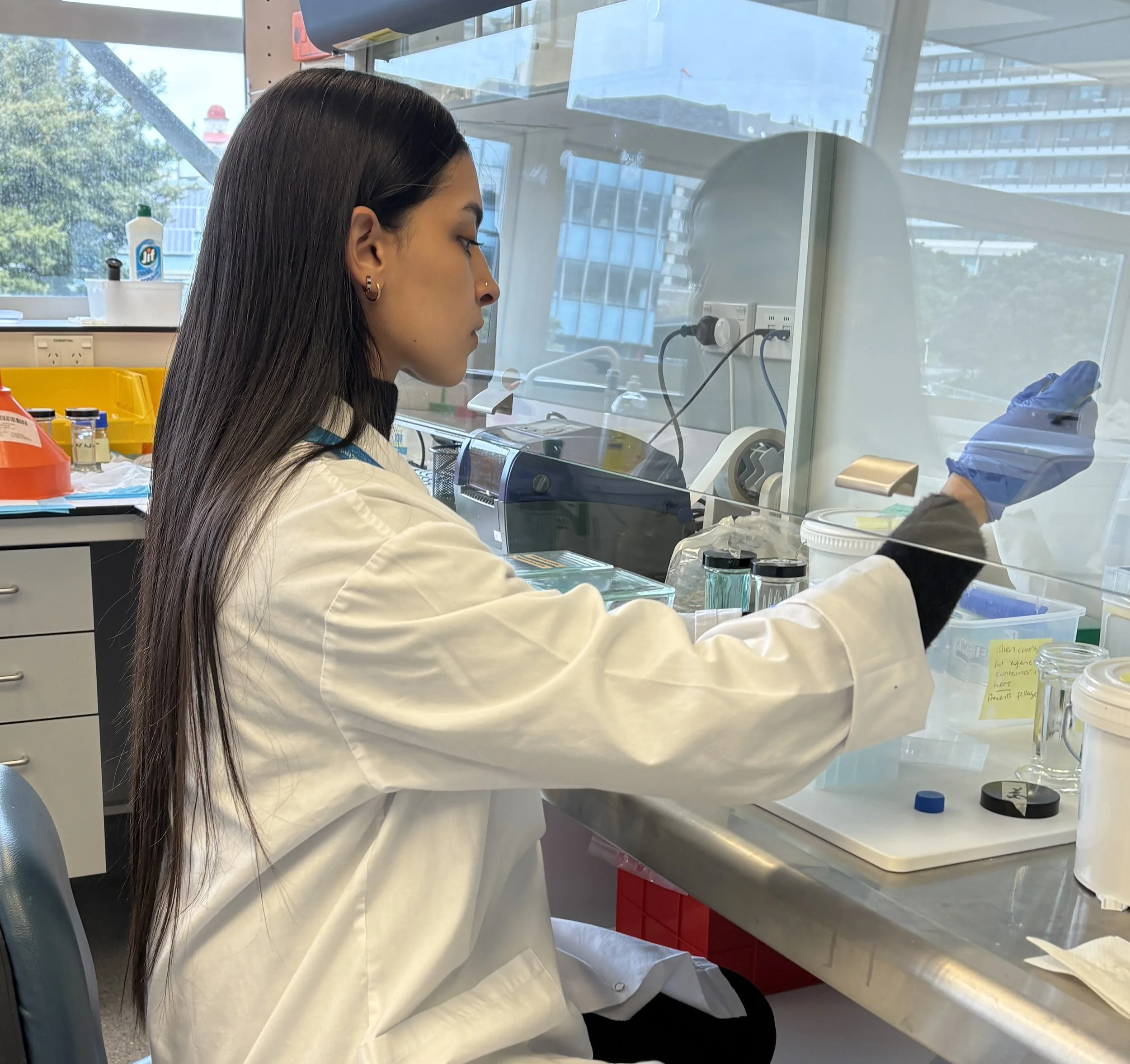
Melissa joined the Gillies McIndoe Research Institute in 2026 after moving to New Zealand from Algeria. She is undertaking her doctoral research on decoding keloid metabolism.
Keloids are raised overgrowths of scar tissue that extend beyond the original boundaries of a wound. They can develop on different parts of the body and may cause pain, swelling, itching, and disfigurement, often leading to social distress and discomfort for patients. Keloids can vary between patients and frequently recur even after surgery, making them an important condition to study because of their tumour-like behaviour.
Melissa’s project involves developing a novel 3D co-culture model to mimic keloid disease in vitro, with the aim of elucidating new pathways and mechanisms. She will also perform targeted metabolomics and lipidomics on whole tissue samples to identify metabolite changes and altered pathways. This work will help improve understanding of keloids, provide an important biological baseline for future research, and support the development of more effective therapies.
Her research is supervised by Raka Mitra, Dr Clint Gray, Associate Professor Helen Fitzsimons, and Dr Tracey Hale. The project brings together expertise in skin research, molecular and cell biology, and multi-omics approaches.
Before beginning her PhD, Melissa completed a master's in biomedical science by Research at the University of Buckingham in the UK, where her project investigated the potential beneficial effects of Oleuropein and Hydroxytyrosol on skin aging. This experience deepened her strong passion for skin research and strengthened her commitment to understanding skin health and disease. She previously completed a bachelor's degree in biology with a branch in Food Sciences at the University of Life Sciences and Technology of Houari Boumediene in Algeria, giving her experience in studying cells and the molecular processes that influence health and disease.
Melissa was drawn to Gillies McIndoe because it offers the chance to combine fundamental laboratory science with research that matters to keloid patients. She also values the institute’s supportive, collaborative culture and its focus on turning biological discoveries into better therapies.
Outside the lab, Melissa enjoys spending time with family and friends, exploring the outdoors in Wellington, and discovering new places. She values learning, personal growth, and positivity.